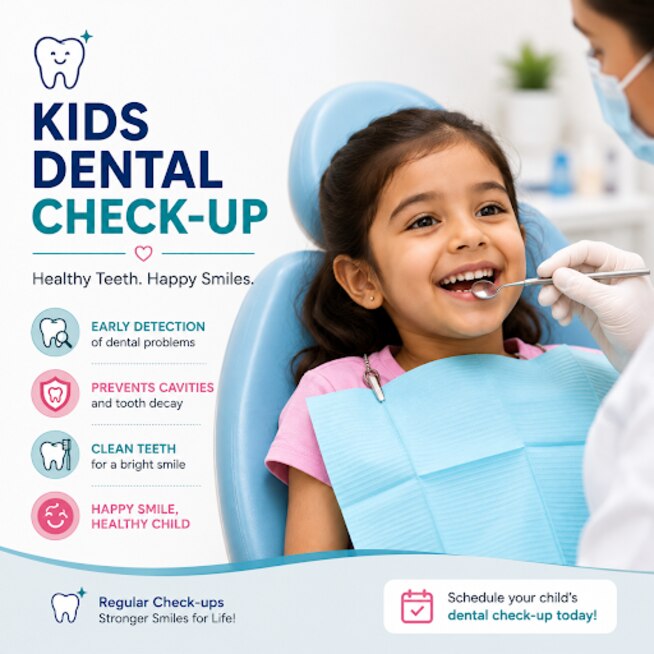
Tooth decay, gum inflammation, enamel defects and developing bite problems can progress before a child feels anything unusual. By understanding what a checkup detects, when visits should begin, what to tell the dentist and which symptoms need urgent care, you can use pain-free visits to prevent more invasive treatment later.
Key takeaways
- White, chalky spots can signal early decay before a child feels pain.
- Routine visits check teeth, gums, bite, growth, and cleaning habits.
- Tell the dentist about medicines, health conditions, habits, and previous dental treatment.
- Seek urgent care for facial swelling, uncontrolled bleeding, or severe dental pain.
Why a painless mouth can still hide dental disease
A child can have dental disease without pain because early damage affects enamel, which has no nerve supply. Painless tooth decay in children often begins as enamel demineralisation, seen as a white, chalky, or brown patch, before reaching the sensitive dentin.
A child may also overlook gum inflammation, an enamel defect, or a developing bite problem because these conditions do not hurt.
Tooth decay in baby teeth can progress quietly. Waiting for symptoms can allow:
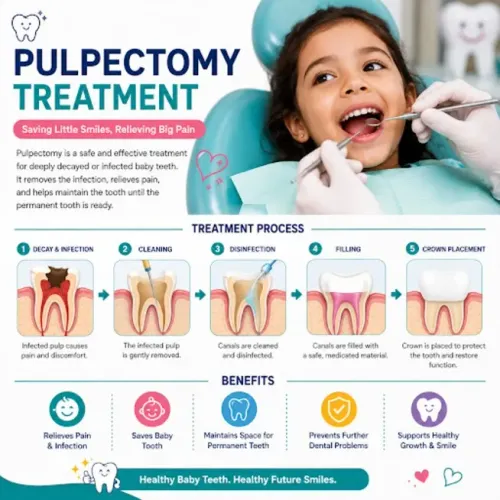
- A small cavity to reach the pulp, where treatment may require a pulpotomy or extraction.
- Dental infection in children to develop, sometimes causing swelling, fever, trouble eating, or an urgent visit.
- Pain, poor sleep, missed school, and reduced concentration once the disease becomes advanced.
- Premature loss of a baby tooth, reducing space for the permanent tooth developing beneath it.
A routine examination finds problems while treatment choices are simpler and less destructive. It also reveals risk factors you may not connect with teeth, such as frequent sugary drinks, bedtime bottles, limited fluoride exposure, mouth breathing, or dry mouth caused by medication.
Children with enamel defects, previous decay, developmental differences, special health-care needs, or orthodontic appliances need risk-based prevention even when their mouth appears comfortable.
What the dentist checks during a routine visit
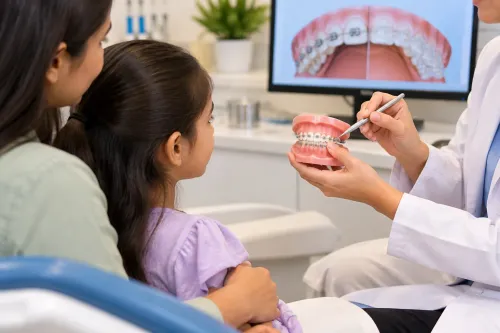
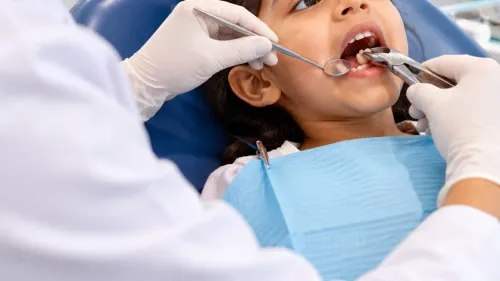
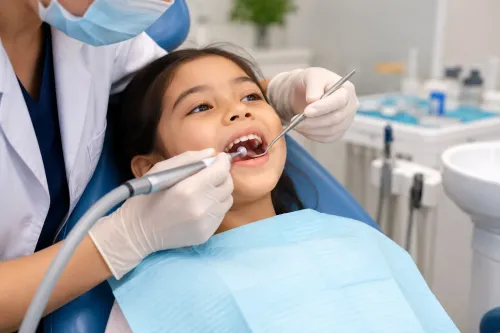
What happens during a kids dental checkup begins with a review of medical and dental history, brushing, diet, fluoride exposure, and habits that affect oral health. The dentist then checks the mouth for problems a parent cannot see easily.
- Each tooth for early decay, enamel defects, cracks, or unusual colour
- Gums for plaque-related inflammation, swelling, or bleeding
- The bite and jaw for crowding, crossbite, or an open bite
- Eruption and tooth development for delayed, missing, or extra teeth
- The mouth for signs of thumb-sucking, prolonged pacifier use, or mouth breathing
Fluoride varnish is considered when a child has erupted teeth and needs extra protection against decay, especially with higher decay risk or limited fluoride exposure. It is preventive care, not a response reserved for painful teeth.
Dental sealants for molars are considered when deep pits and grooves trap food or toothbrush bristles cannot clean them well. Sealants reduce decay risk in those surfaces, but the dentist must check them at later visits because they can wear or develop gaps.
Dental X-rays for children are not automatic at every appointment. The dentist orders them after reviewing the child’s history, examining the mouth, and assessing decay risk; crowded teeth, suspected decay between teeth, unusual eruption, or higher risk can justify imaging, while a low-risk child may need it less often.
What changes the dentist monitors at each age
Monitoring starts with the first dental visit by 12 months, not with a complaint. The dentist establishes a baseline for tooth development and decay risk, then compares future findings with it. Recall timing changes as the child grows.
| Age or stage | What the dentist monitors | How recall timing is decided |
|---|---|---|
| Birth to 12 months | Early baby teeth eruption, enamel development, feeding habits, fluoride exposure and brushing | Arrange the first visit by 12 months; shorten the interval if decay risk or an enamel concern appears |
| Toddler and preschool years | Completion of baby teeth eruption, cavities, gums, bite, thumb-sucking or prolonged pacifier use | Review sooner for active decay, frequent sugary drinks, poor plaque control or limited fluoride exposure |
| Mixed dentition | Loss of baby teeth, permanent teeth eruption, delayed or extra teeth, crossbite and crowding in children teeth | Schedule around eruption changes and treatment needs; refer for orthodontic assessment when growth or alignment needs closer review |
| Permanent teeth arriving | New molars, enamel defects, spacing, alignment and jaw development | Continue based on disease risk and eruption stage, rather than using a fixed calendar |
A six-month appointment suits some children, but it is not a universal rule. Children with previous decay, high-risk habits, little fluoride exposure or recent treatment may need shorter recalls; low-risk children may need longer intervals.
X-rays follow the same principle: the dentist orders them after examining the child and reviewing risk, not automatically at every visit.
What parents should share before the examination
Tell the dentist what happens between visits, not only what hurts. Your child’s daily routine, health history and previous dental care reveal risks that a quick look at the teeth may miss.
- Describe the children’s toothbrushing routine: who helps, how often, and whether fluoride toothpaste for children is used.
- Record sugary drinks and snacks, bedtime bottles, grazing between meals, and drinking water or fluoridated water.
- Mention thumb-sucking and pacifier use, mouth breathing, tooth grinding, and any difficulty chewing or sleeping.
- Share medical conditions, developmental differences, allergies, medicines, dry mouth, enamel defects, and special health-care needs.
- Give dates and details of fillings, extractions, fluoride treatments, injuries, dental infections, orthodontic appliances, and previous X-rays.
| Information to share | Why it changes assessment | Useful detail |
|---|---|---|
| Daily habits | Frequent sugar or limited fluoride exposure raises decay risk even without pain. | List drinks, snacks, bedtime feeding and brushing times. |
| Health details | Illnesses, medicines and enamel problems can alter saliva, tooth strength or cooperation. | Name each medicine and explain any diagnosed condition. |
| Previous treatment | Earlier decay, trauma or appliances can require closer monitoring. | State the tooth treated, treatment received and any continuing concern. |
Bring medication bottles, treatment records or previous X-ray reports when available. Honest details help the dentist choose prevention advice, recall timing and imaging based on your child’s actual risk rather than appearance alone.
When a routine checkup is enough—and when to seek urgent care
Keep a routine appointment when your child is comfortable, eating normally, and has no swelling, uncontrolled bleeding, injury, or rapidly worsening symptom. Preventive care remains useful for checking eruption, gums, bite, enamel, and decay risk before a problem becomes painful.
Seek urgent dental care for children when your child has:
- A knocked-out permanent tooth: hold it by the crown, rinse it briefly if dirty, and place it back in the socket if your child can tolerate this. Otherwise, keep it in milk and reach a dentist immediately. Never reinsert a knocked-out baby tooth.
- Dental trauma in children involving a fractured tooth, a tooth pushed out of position, persistent bleeding, severe pain, or an injury that affects biting.
- Facial swelling and dental fever, especially with difficulty swallowing, breathing, opening the mouth, or marked lethargy. These symptoms need same-day assessment; breathing difficulty requires emergency medical care.
- A dental abscess, spreading swelling, or pain that prevents sleep, eating, or drinking.
A child-focused clinician can separate an injury requiring immediate treatment from a problem suitable for a scheduled visit, using an age-appropriate examination and X-rays only when indicated.
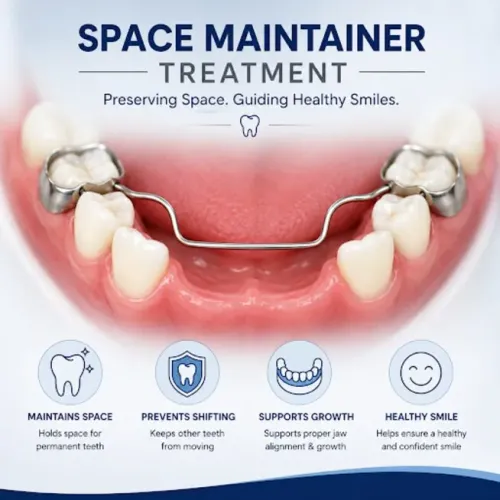
Dr Rohini Lahane’s paediatric dental care can also assess whether early tooth loss needs a space maintainer or whether decay needs a filling, rather than leaving the decision until symptoms escalate.
Related services
Pediatric / Kids Dental Care Kids Dental Check-up by Dr. Rohini Lahane in Hadapsar, Pune Dr. View service → |
Pediatric / Kids Dental Care by Dr. Rohini Lahane in Hadapsar, Pune Dr. Rohini Lahane (BDS, MDS) believes that prevention is the foundation of lifelong oral health. View service → |
Frequently asked questions
Why can a child have tooth decay without pain?
Early decay affects enamel, which has no nerve supply, so damage can appear before sensitivity or pain. Look for white, chalky, or brown patches.
What does a dentist check during a routine kids dental visit?
The dentist examines teeth for decay, checks gums and oral hygiene, assesses the bite and tooth development, and discusses cleaning and diet.
What should parents tell the dentist before the examination?
Share your child’s medicines, medical conditions, allergies, dental injuries, previous treatment, tooth-grinding, thumb-sucking, and any changes you have noticed.
When does a child need urgent dental care?
Seek urgent care for facial swelling, severe or persistent pain, uncontrolled bleeding, a knocked-out permanent tooth, fever with dental symptoms, or trouble breathing or swallowing.