Plaque begins forming on a child’s teeth soon after eating and can irritate the gums or fuel tooth decay when it remains undisturbed. By the end, you will know how to clean your child’s mouth at home, when professional cleaning or scaling helps, and which dental treatments address problems that cleaning alone cannot fix.
Key takeaways
- Brush twice daily with fluoride toothpaste and supervise until technique is reliable.
- Limit frequent sugary snacks and drinks that feed acid-producing plaque bacteria.
- Arrange an assessment for bleeding gums, tooth pain, swelling, or persistent bad breath.
- Professional cleaning removes hardened calculus that brushing cannot remove at home.
How does plaque damage children’s teeth and gums?
Dental plaque is a continually forming bacterial biofilm. If brushing does not disrupt it, its bacteria produce acids that remove minerals from enamel and can initiate dental caries. At the gum edge, plaque irritates tissue, causing redness, swelling, bleeding during brushing, and bad breath; persistent inflammation can progress beyond gingivitis.
Teeth cleaning for children removes deposits, but it cannot repair a cavity.
| What cleaning removes | What it is | What it cannot do |
|---|---|---|
| Soft plaque | A sticky bacterial film removed by brushing and interdental cleaning | Reverse enamel already lost |
| Calculus in children | Retained plaque hardened by minerals; an ordinary toothbrush cannot safely remove it | Prevent new calculus without better daily cleaning |
| Surface stains | External colour deposits polished when appropriate | Treat decay beneath the enamel |
| Children’s cavities, or dental caries | Damaged tooth structure requiring examination and restorative treatment | Be repaired by cleaning alone |
Cavity risk also depends on fluoride exposure, frequent or prolonged exposure to fermentable carbohydrates, saliva, tooth anatomy, and dental examinations. Professional cleaning supports prevention but cannot replace daily brushing and cleaning between teeth. Untreated decay in primary teeth can cause pain, infection, difficulty eating or sleeping, and missed school.
It can damage the developing permanent tooth, while premature extraction can reduce space for it and contribute to later orthodontic problems.
How should you clean a child’s teeth at home?
1. Before teeth erupt, wipe an infant’s gums with a clean, damp cloth once a day. This removes residue and helps your child accept daily mouth care.
2. After teeth appear, practise brushing children’s teeth twice daily for about two minutes with a soft-bristled toothbrush. Use a smear, or rice-grain amount, of fluoride toothpaste for children below age 3; use a pea-sized amount from age 3 to 6.
Supervise brushing, encourage spitting rather than swallowing excess toothpaste, and brush or re-brush every surface until your child can clean reliably. Fluoride toothpaste remains appropriate when swallowing is a concern: the safety measures are the small age-appropriate amount and adult supervision.
3. Start flossing children’s teeth or using another interdental cleaner for children when two teeth touch. Toothbrush bristles do not reliably clean contact areas, so help younger children and children with braces or tight contacts. Do not force floss through spaces that are visibly open.
4. Limit frequent sugary drinks and repeated sipping of milk or juice. Avoid bedtime bottles containing milk, formula, juice, or another sugary drink; plain water is the safer bedtime choice once your child is developmentally ready.
5. Bleeding is usually plaque-induced gingivitis, not a reason to stop brushing. Improve plaque removal and arrange an evaluation for persistent bleeding, swelling, pain, spontaneous bleeding, or loose teeth.
What happens during a professional cleaning, and when is scaling needed?
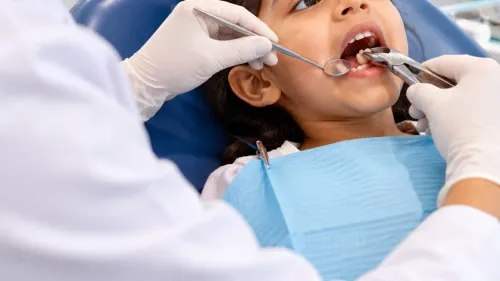
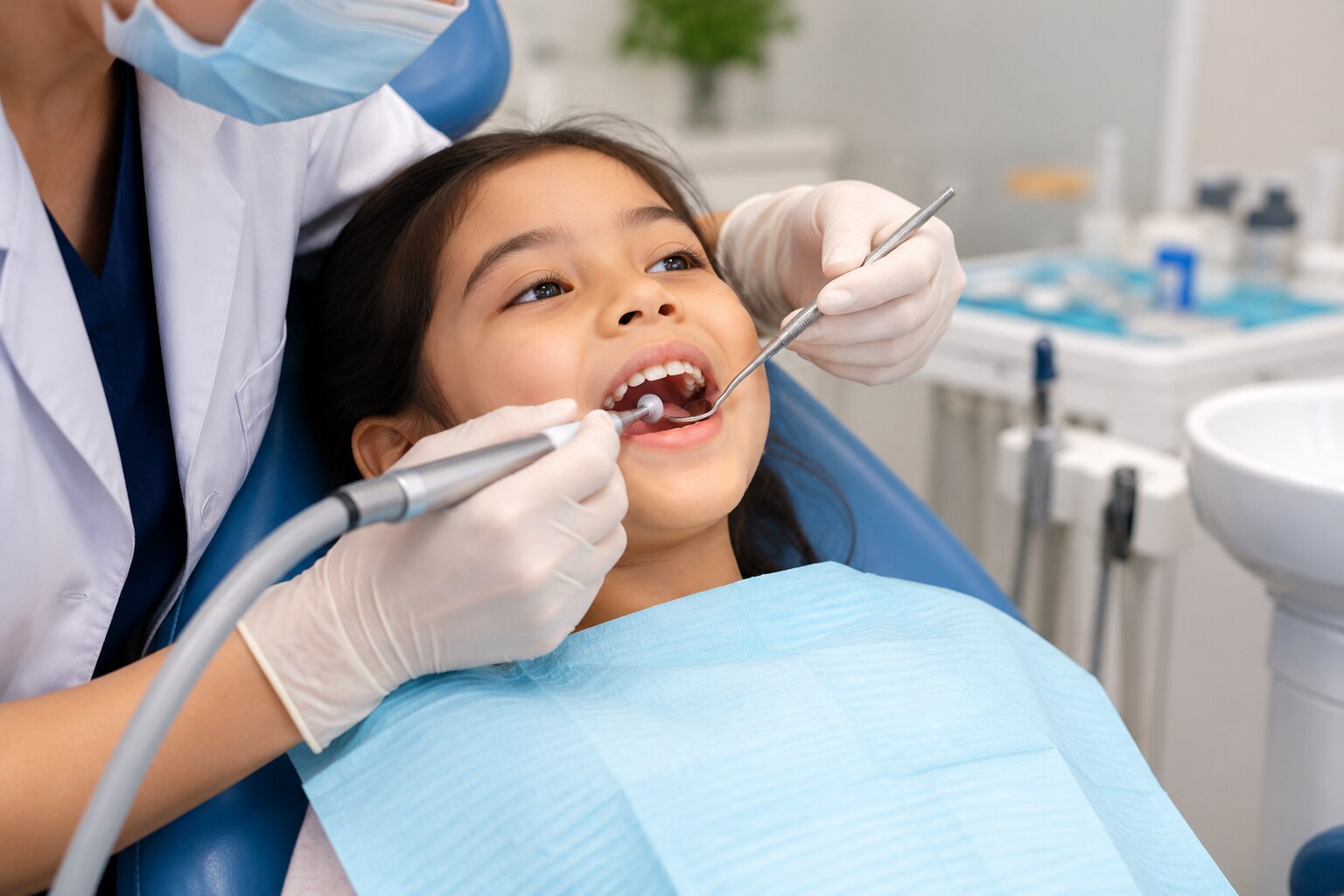
A professional dental cleaning for children follows a simple sequence, but scaling is not automatic. The children’s dental cleaning procedure is adjusted to the child’s teeth, gums, age, and ability to cooperate.
- The dentist examines the teeth and gums and checks for visible plaque, calculus, redness, swelling, or bleeding.
- The child receives brushing with a child-appropriate instrument; the dentist uses scaling instruments when calculus is present.
- Surface stains are polished when appropriate, then the mouth is rinsed.
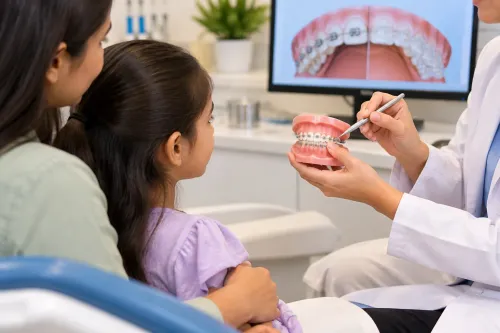
- The dentist demonstrates brushing and interdental-cleaning techniques for the child and caregiver.
Scaling for children is considered when visible calculus remains attached to teeth, gum inflammation is present, oral-hygiene ability is limited, braces or another appliance traps deposits, medical factors affect gum health, or cooperation permits safe treatment. A toothbrush cannot remove hardened calculus, but scaling is unnecessary when no calculus is present.
Professional cleaning removes deposits that home care cannot, while daily fluoride-toothpaste brushing and interdental cleaning prevent plaque and calculus from returning.
Dental visits should begin when the first tooth erupts and no later than 12 months. The first visit assesses caries risk, fluoride exposure, feeding habits, hygiene, and oral development.
There is no evidence-based rule for how often should children have teeth cleaned exactly every six months. Recall timing depends on caries risk, gingival health, eruption stage, braces, hygiene ability, and previous disease. Higher-risk children need more frequent preventive care.
How is cleaning different from other children’s dental treatments?
A children’s dental check-up versus cleaning involves different purposes. A check-up examines the teeth, gums, bite, eruption, and disease risk; it does not itself remove every deposit. Cleaning removes soft plaque, hardened calculus, and surface stains when present, supporting healthy gums, but it cannot reverse enamel loss, replace a missing sealant, or treat an infection.
Preventive and restorative treatments address separate problems:
- Fluoride varnish for children is a professionally applied topical treatment that strengthens caries prevention. Systemic fluoride supplements require assessment of total fluoride exposure from drinking water and toothpaste.
- Dental sealants for children cover vulnerable pits and fissures on permanent molars where bristles may not reach. They are preventive restorations, not substitutes for brushing or fluoride toothpaste, and need review because they can wear or be lost.
- A children’s tooth filling repairs a cavity that cleaning cannot reverse.
- Deep periodontal treatment addresses disease below the gumline and is not routine child cleaning.
Choose care according to the finding: cleaning for deposits, varnish or sealants for added prevention, and a filling or periodontal treatment for disease. Daily brushing and interdental cleaning remain essential because professional cleaning alone cannot stop plaque returning.
This distinction helps you request the right care instead of treating every dental problem as a cleaning problem.
When should you arrange a child’s dental assessment?
Arrange a paediatric dental assessment without waiting for pain if your child has any of these signs:
| Sign | What to do |
|---|---|
| Persistent gum bleeding, swelling, or bad breath | Book an assessment; plaque-induced gingivitis is common, but ongoing symptoms need examination. |
| Tooth sensitivity, visible white or brown marks, or a cavity | Arrange a visit before mineral loss becomes a larger cavity. |
| Pain, a loose or damaged tooth, or difficulty eating | Seek prompt assessment, especially if sleep, nutrition, or school attendance is affected. |
| An orthodontic appliance that makes cleaning difficult | Book preventive guidance and a review of areas the appliance is hiding. |
Early decay and gingivitis are easier to manage before they cause infection, missed school, or damage to developing permanent teeth. Losing a primary tooth too early can also reduce space for its successor.
There is no rule that every child needs cleaning every six months; the interval depends on risk, gum health, eruption, braces, cleaning ability, and previous disease.
Bring the child’s toothbrush and describe brushing and snack routines. During the visit, ask:
- Which surfaces need adult re-brushing?
- Do two teeth touch, requiring floss or another interdental cleaner?
- Is calculus or fluoride varnish present?
- When should the next review occur?
For families seeking preventive dental care for children in Pune, Dr Rohini Lahane can link cleaning findings with the treatment the examination supports, rather than repeating scaling while plaque-forming habits remain unchanged.
Related services
Pediatric / Kids Dental Care Kids Dental Check-up by Dr. Rohini Lahane in Hadapsar, Pune Dr. View service → |
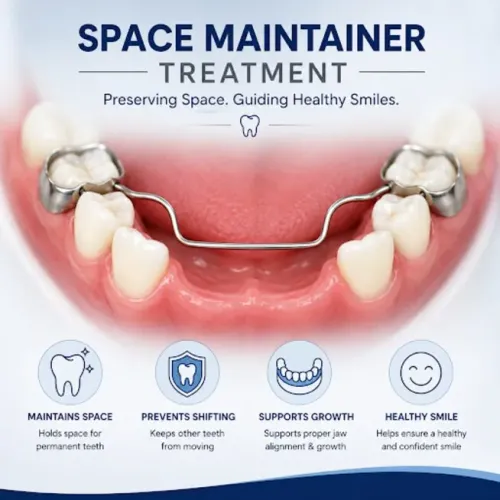
Pediatric / Kids Dental Care by Dr. Rohini Lahane in Hadapsar, Pune Dr. Rohini Lahane (BDS, MDS) provides Space Maintainer Treatment to help preserve the space left by a... View service → |
Frequently asked questions
How does plaque damage children’s teeth and gums?
Plaque bacteria produce acids that remove minerals from enamel, starting dental caries. At the gum edge, plaque can cause redness, swelling, bleeding during brushing, and bad breath. Persistent inflammation can progress beyond gingivitis.
How should you clean a child’s teeth at home?
Brush your child’s teeth twice daily with fluoride toothpaste, using a soft-bristled toothbrush and gentle movements along every tooth surface and the gumline. Supervise brushing until your child can clean effectively without reminders, and avoid frequent sugary snacks and drinks.
What happens during a professional cleaning, and when is scaling needed?
A dental professional examines the teeth and gums, removes plaque and calculus, and polishes the tooth surfaces. Scaling is needed when calculus has hardened onto the teeth because brushing cannot remove it. The dentist will explain whether your child needs cleaning alone or additional treatment.
When should you arrange a child’s dental assessment?
Arrange an assessment for tooth pain, visible decay, gum swelling, bleeding that continues with improved brushing, persistent bad breath, sensitivity, dental injury, or difficulty eating. Regular assessments also help identify developing problems before they require more extensive treatment.