A child’s infected or broken tooth is not automatically a tooth that must be removed. The decision depends on whether enough healthy structure remains, whether infection can be controlled, the child’s age and dental development, and the effect treatment could have on the developing permanent tooth. By the end, you will know which findings make extraction necessary, which alternatives dentists consider, and when urgent assessment is needed.
Key takeaways
- Extraction is considered when too little sound tooth remains for reliable restoration.
- Fever, facial swelling, severe pain, or trouble swallowing needs urgent dental assessment.
- Baby-tooth extraction depends on age, eruption timing, and the risk of losing space.
- Trauma to a baby tooth differs from injury to a developing permanent tooth.
When a damaged or infected tooth can no longer be saved
Extraction becomes reasonable when a child’s tooth is an unrestorable tooth: too little sound structure remains to hold a durable filling or crown, or infection cannot be controlled predictably.
An unrestorable crown or root, extensive decay below the gumline, a vertical root fracture, severe root damage, or inadequate periodontal support can make removal safer than repeated treatment.
| Tooth situation | When extraction may be necessary | What changes the decision |
|---|---|---|
| Primary tooth | Extensive decay, uncontrolled abscess, advanced root resorption, or infection threatening the developing permanent tooth | Whether pulpotomy or pulpectomy can control infection, remaining tooth structure, eruption timing, and space |
| Permanent tooth | A fracture or decay leaves no predictable way to restore the tooth, or infection and structural loss have destroyed its long-term outlook | Root development, remaining pulp vitality, bone support, and whether vital pulp therapy or regenerative treatment could save it |
| Traumatised tooth | Displacement, severe mobility, aspiration risk, infection, or damage to the successor makes retention unsafe | Injury pattern, bite interference, symptoms, and findings on examination and imaging |
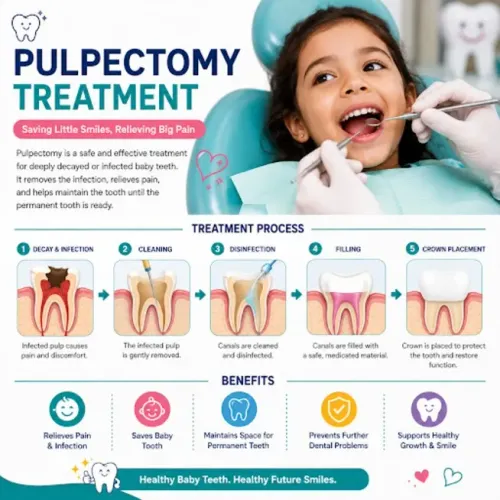
Pain or an abscess does not automatically require extraction. A restorable primary tooth may respond to pulpotomy or pulpectomy, while an immature permanent tooth may benefit from treatment that preserves living pulp and allows its roots to strengthen.
Extraction becomes necessary when those options cannot provide a predictable result, or when the child cannot safely tolerate the required care. Removing a tooth solely because a permanent tooth looks crowded or erupts slowly requires a separate, examination-based orthodontic plan.
How the dentist chooses between restoration, pulp treatment, extraction and observation
A cavity’s size alone does not decide the treatment. The dentist checks the remaining tooth structure, whether a restoration can stay in place, pulp symptoms, root condition, tooth mobility, and dental X-rays showing bone infection, root resorption or damage near the developing permanent tooth.
| Option | Examination findings | Likely plan |
|---|---|---|
| Filling | Decay is limited to the outer tooth, the pulp is healthy, and enough sound tooth remains to support a filling. | Remove decay and restore the tooth. |
| Pulpotomy | The crown pulp is inflamed, but the root pulp remains healthy; there is no abscess, abnormal root resorption or persistent spontaneous pain. | Remove the affected crown pulp and seal the tooth. |
| Pulpectomy | The pulp is infected or dead, yet the tooth remains restorable and its roots can support treatment. | Remove infected pulp, disinfect the canals and seal them. |
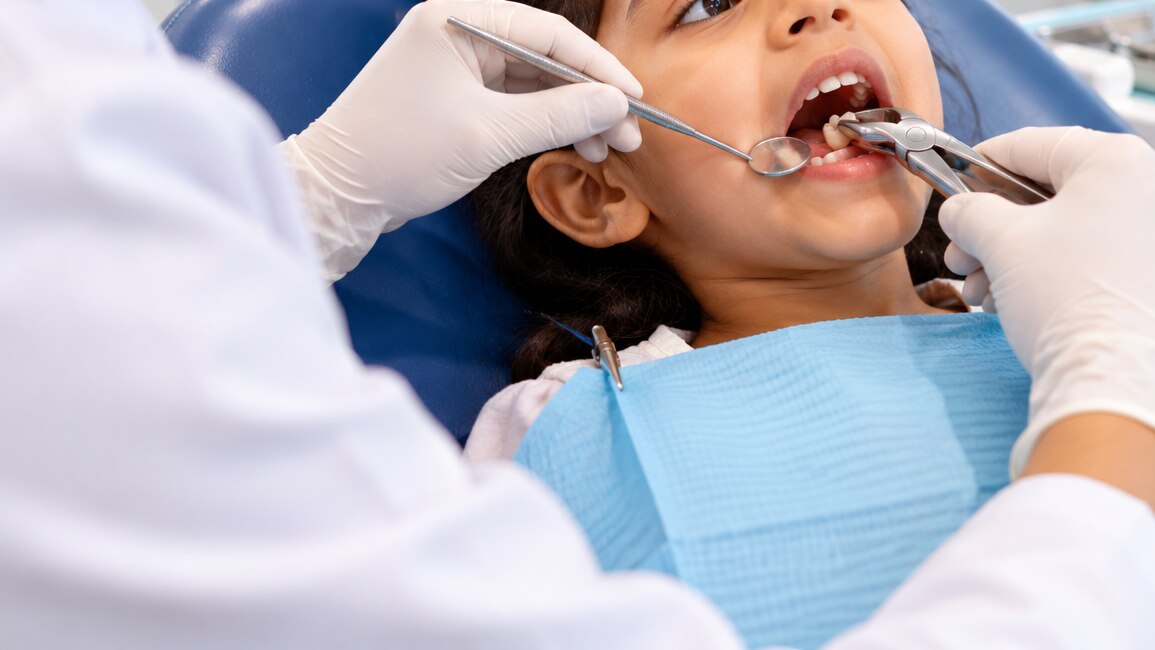
| Extraction | The crown or root cannot be restored, decay extends below the gumline, a vertical root fracture exists, or infection cannot be controlled. Severe root resorption or pathological mobility also weighs against saving it. | Remove the tooth and assess space and eruption consequences. |
| Observation | A traumatic tooth has no dangerous displacement, biting interference, infection, or aspiration risk, and symptoms are settling. | Monitor clinically and with follow-up X-rays. |
Swelling and abscess require source control through pulp treatment, drainage or extraction; antibiotics alone do not remove infected tissue. At a paediatric assessment, Dr Rohini Lahane can use these findings to match treatment to the tooth’s prognosis rather than extract simply because it is painful or dark.
Related services
Adult Dental Care Dr. Rohini Lahane (BDS, MDS) provides safe, gentle, and painless tooth extraction procedures for children and adults using advanced dental... View service → |
Pediatric / Kids Dental Care by Dr. Rohini Lahane in Hadapsar, Pune Dr. Rohini Lahane (BDS, MDS) offers gentle and effective Pulpectomy Treatment for children to save severely... View service → |
Which warning signs require urgent dental assessment
A child needs same-day dental assessment for facial swelling, fever, pus, rapidly worsening pain, or difficulty swallowing or breathing. Treat swelling near the eye or neck, marked lethargy, or inability to open the mouth normally as an emergency; infection may have spread beyond the tooth and require urgent medical care.
| Sign | What it may indicate | What to do |
|---|---|---|
| Facial swelling, especially near the eye or neck | Spreading infection or cellulitis | Arrange same-day dental care; seek emergency care for breathing or swallowing difficulty |
| Fever, marked lethargy, or swollen neck glands | Systemic involvement | Obtain same-day dental or medical assessment |
| Pus, worsening night pain, or reduced mouth opening | Abscess with pressure or deeper spread | Contact a dentist urgently |
Do not wait for severe pain: dental infection can exist with little or no pain. A dentist must control the source by draining the abscess, performing pulp treatment, or removing the tooth. Antibiotics alone do not remove decay, seal an infected pulp, or drain infected tissue, so the infection can persist or return.
They are mainly added when fever, facial swelling, cellulitis, or significant lymph-node involvement indicates systemic or spreading infection.
How age, eruption timing and space affect a baby-tooth extraction
A primary molar is not automatically expendable because it will eventually fall out. Premature loss of baby tooth can let neighbouring teeth drift into the gap, reduce arch space, and obstruct the developing permanent successor. That can complicate eruption and alter the bite, especially when the successor is still some time from emerging.
Before recommending a space maintainer, the dentist considers:
- The child’s age and the expected eruption timing
- Which primary tooth was lost
- The developing permanent successor’s position and development
- The remaining space and the child’s bite
- Whether the loss was part of an orthodontic eruption plan
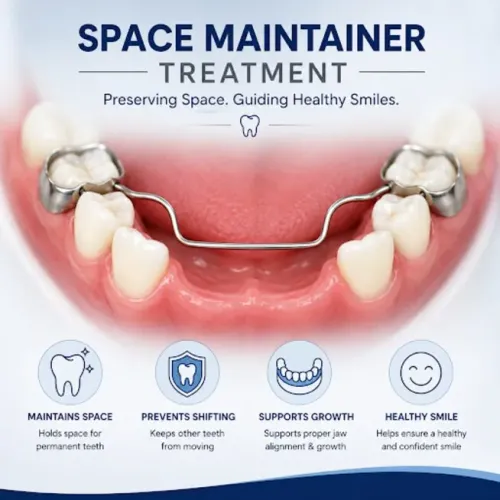
After early extraction, a space maintainer might preserve the gap while the permanent successor develops. For one missing primary molar, a band and loop appliance is a common design: a band fits around an adjacent tooth and a loop spans the empty space. It does not restore chewing function or prevent every orthodontic problem.
The appliance can fail if cement loosens or the fit changes, so follow-up is needed to check it and remove it when the permanent tooth erupts. If that tooth is close to emerging or adequate space remains, an appliance may not be necessary.
What changes after trauma or when the tooth is a developing permanent tooth
A grey tooth after dental trauma does not automatically need extraction. A darkened baby tooth may have an injured pulp without active infection, so the dentist interprets its colour alongside symptoms, mobility, displacement and radiographic findings. The examination also checks whether the injury threatens the developing permanent successor.
The decision depends on:
- Pain, swelling, pus or a draining gum
- Looseness severe enough to create an aspiration or swallowing risk
- Displacement or interference with the child’s bite
- Root fracture, resorption or loss of restorability
- Infection close to the developing permanent tooth
| Option | What it means | When it applies |
|---|---|---|
| Observation | Review symptoms, colour, mobility and radiographs | The tooth is stable, restorable and free from uncontrolled infection |
| Pulp treatment | Preserve or remove diseased pulp while keeping the tooth | A primary tooth may need a pulpotomy or pulpectomy; an immature permanent tooth may benefit from vital pulp therapy |
| Extraction | Remove a tooth that cannot be safely or predictably retained | Severe displacement, aspiration risk, unrestorable damage, uncontrolled infection or serious threat to the successor |
An immature permanent tooth deserves particular caution: preserving its living pulp can allow the root to continue developing and strengthen thin root walls. Depending on pulp vitality and infection, treatment may include vital pulp therapy, apexification or regenerative endodontic treatment.
A potentially restorable tooth warrants assessment by a clinician experienced in paediatric endodontic care before extraction is chosen.
Frequently asked questions
When can a damaged or infected child’s tooth no longer be saved?
Extraction becomes reasonable when too little sound structure remains to support a durable filling or crown, or when infection cannot be controlled predictably.
How does a dentist choose between restoration, pulp treatment, extraction, and observation?
The dentist assesses remaining tooth structure, infection, symptoms, the child’s age, the tooth’s role, and whether treatment can provide a predictable result.
Which warning signs require urgent dental assessment for a child?
Seek urgent assessment for facial swelling, fever, severe or worsening pain, pus, difficulty swallowing, breathing problems, or difficulty opening the mouth.
How do age and eruption timing affect extraction of a baby tooth?
The dentist considers how soon the permanent successor will erupt and whether early loss could cause neighbouring teeth to drift into the space.
What changes after trauma or when the tooth is a developing permanent tooth?
Trauma requires assessment of the tooth, surrounding bone, and developing successor. A developing permanent tooth receives special consideration because preserving it can affect future function and appearance.
Related service
Pediatric / Kids Dental Care by Dr. Rohini Lahane in Hadapsar, Pune Dr. Rohini Lahane (BDS, MDS) provides Space Maintainer Treatment to help preserve the space left by a... View service → |