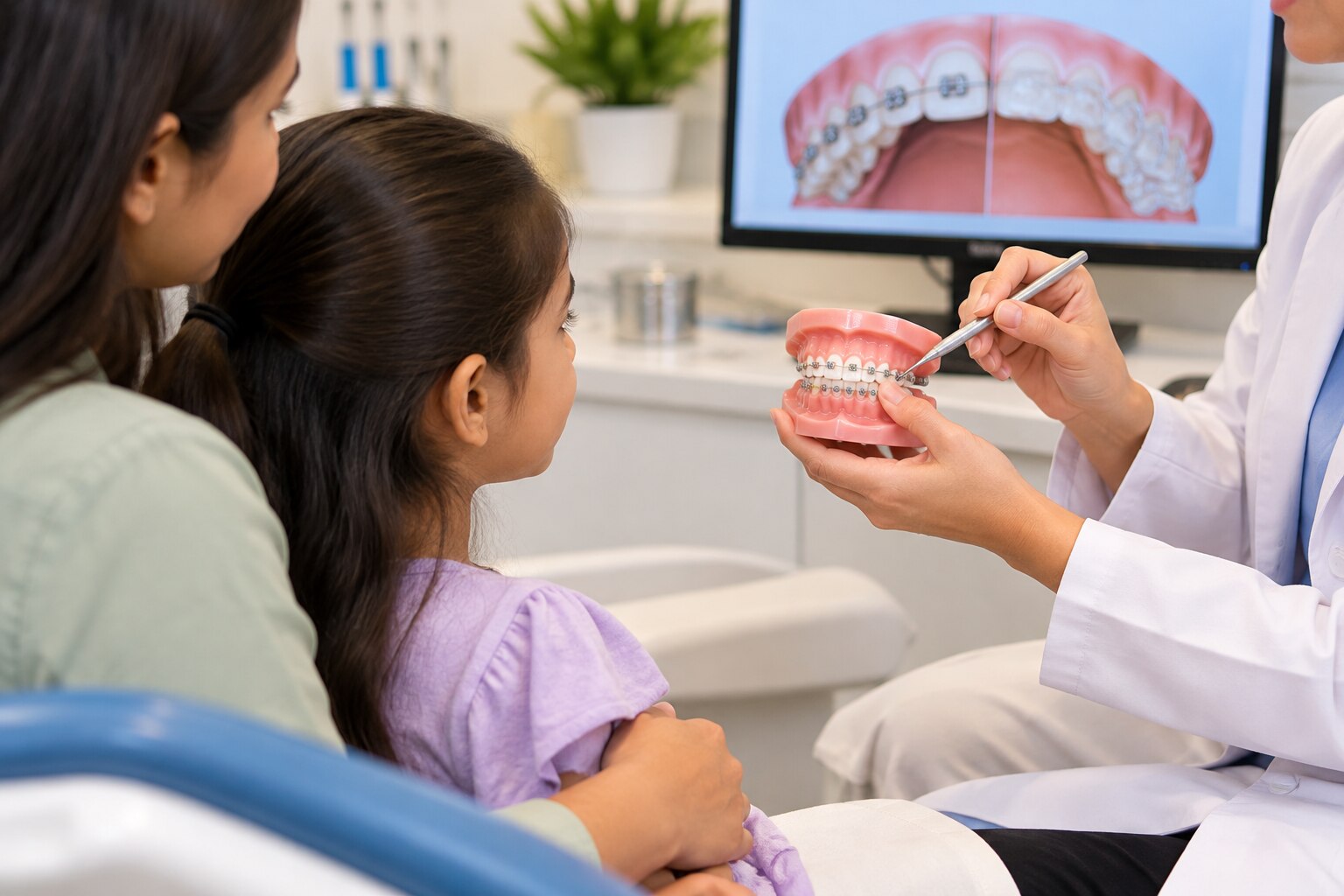
A child’s first orthodontic evaluation is recommended around age 7, but that appointment does not mean braces will be fitted immediately. You will learn how age 7 differs from treatment age, which signs call for an earlier assessment, what happens during evaluation, and how follow-up decisions are made.
Key takeaways
- Schedule the first orthodontic evaluation by age 7.
- Seek earlier advice for jaw pain, severe crowding, or delayed tooth eruption.
- An evaluation does not mean your child needs braces immediately.
- Follow the orthodontist’s monitoring or treatment plan after the visit.
Why Age 7 Is the Recommended First Orthodontic Check
Around age 7, a child has enough permanent teeth emerging for an orthodontist to spot developing problems, even when braces are not appropriate yet. The American Association of Orthodontists recommends a first orthodontic evaluation by this age because early information can prevent a problem from becoming harder to manage.
This visit is not a prescription for braces. It is a planning checkpoint during the mixed-dentition stage, when baby teeth and permanent teeth are present together. The clinician can see whether the bite and jaw growth are following a workable pattern, then recommend observation, early treatment, or later comprehensive braces.
An early orthodontic evaluation is particularly useful for identifying:
- Permanent teeth that lack space or are erupting in the wrong position
- A crossbite, underbite, open bite, or a lower jaw that shifts when the child closes
- A prominent overjet that puts front teeth at risk of injury
- Missing or extra teeth, facial asymmetry, or an unusual jaw relationship
- Baby teeth lost too early or retained too long
Age 7 is therefore a sensible age for a braces consultation, not a fixed age for fitting braces. Many children need only periodic reviews until more permanent teeth erupt and their growth makes the treatment timing clearer.
Children with severe bite changes, facial asymmetry, tooth blockage, or a craniofacial condition should be assessed before age 7.
What the Orthodontic Evaluation Checks
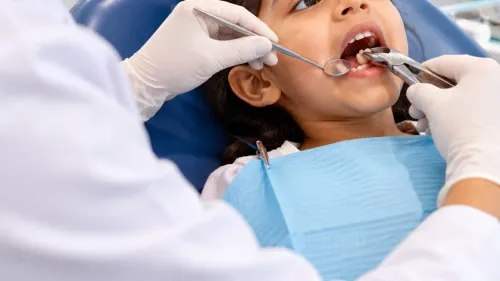
An orthodontic evaluation for children looks beyond tooth health: it examines how teeth erupt, fit together, and relate to the jaws and facial growth. A routine dental check-up mainly identifies decay, gum disease, enamel defects, and cleaning needs. It may notice a bite concern, but it does not map treatment timing in the same detail.
| Assessment focus | Routine dental check-up | Orthodontic evaluation |
|---|---|---|
| Tooth position | Checks for decay, damage, or infection | Studies spacing, displacement, and eruption pattern |
| Bite | Notes obvious discomfort or chewing difficulty | Measures overbite, underbite, open bite, and crossbite |
| Jaw and growth | Reviews general oral development | Assesses jaw relationships, facial symmetry, and growth direction |
| Planning | Recommends dental treatment | Determines whether observation, early treatment, or later braces may fit |
The clinician assesses:
- Eruption pattern, including delayed, ectopic, blocked, missing, or extra teeth
- Crowding and bite problems, including a lower jaw shift when the child closes
- Available space after baby-tooth loss and the position of permanent teeth
- Jaw growth, facial balance, and a prominent overjet that could increase injury risk
- Oral habits such as thumb-sucking or prolonged pacifier use
The clinician may request dental records and radiographs when tooth position, missing teeth, or delayed eruption cannot be judged from an examination alone. These images help locate unerupted teeth and compare available space; they do not mean the child needs braces immediately.
When a Child Should Be Seen Before Age 7
Seeing an orthodontist before age 7 is sensible when a child’s bite, tooth eruption, or facial growth looks abnormal. Early assessment can distinguish a problem that needs prompt attention from one that can be monitored.
| Finding | What you may notice | Why assessment matters |
|---|---|---|
| Crossbite in children | An upper tooth bites inside a lower tooth | A persistent crossbite can affect jaw growth and cause a lower-jaw shift |
| Facial asymmetry | The chin or smile appears pulled to one side | Uneven jaw growth needs assessment rather than routine observation alone |
| Ectopic eruption | A permanent tooth emerges high, low, or behind another tooth | The tooth may become blocked or damage the neighbouring root |
| Severe crowding | Permanent teeth have no visible room to erupt | Early planning can protect space before several teeth become trapped |
| Protruding incisors or jaw | Front teeth stick out markedly, or the lower jaw appears prominent | A prominent overjet increases the chance of injury; a jaw discrepancy may have a useful growth window |
| Early or traumatic baby-tooth loss | A baby tooth is lost years before its expected replacement | Nearby teeth can drift and block the permanent tooth |
| Craniofacial condition | A diagnosed condition affects the lip, palate, skull, or jaws | Coordinated orthodontic and specialist planning may be needed |
Persistent thumb-sucking or pacifier use, difficulty biting, and an open bite also justify an assessment. A general or paediatric dental screening does not replace orthodontic evaluation when these signs appear; the orthodontist assesses eruption, space, jaw relationships, facial growth, and treatment timing.
Why Evaluation Age and Braces Age Are Different
A check at age 7 is a decision point, not a fitting appointment. Most children are in mixed dentition, with baby teeth and permanent teeth present together, so the clinician can see how teeth are erupting and whether jaw growth is creating a problem. Braces may be delayed until enough permanent teeth have appeared.
The plan depends on what the evaluation finds:
- Observation tracks eruption, spacing, and jaw growth when no immediate intervention will improve the outcome. The clinician sets a review date rather than starting treatment too early.
- Interceptive orthodontic treatment addresses a specific developing problem, such as a crossbite, blocked permanent tooth, or severe space loss. Early treatment can prevent the problem from becoming harder to correct.
- Two-phase orthodontic treatment uses an early phase for a defined problem and a later phase after more permanent teeth erupt. It is not automatically better than one comprehensive treatment phase.
- Comprehensive braces treatment begins when the teeth, growth pattern, and cooperation level make active correction worthwhile.
When children get braces varies because chronological age does not show dental development or remaining jaw growth. Treatment that modifies jaw growth must match the child’s growth pattern and the type of discrepancy.
Many children receive braces during later mixed dentition or early permanent dentition, often between ages 9 and 14, while others need treatment earlier or later.
What Parents Should Do After the Evaluation
A “not yet” result should end with a dated plan, not a vague instruction to return later. Ask for the orthodontic observation schedule, the signs that require an earlier appointment, and the professional who will review growth and tooth eruption.
- The next review date, based on the child’s eruption pattern and growth potential.
- Copies or explanations of photographs, dental models, and radiographs taken, including what each record will be compared against.
- A plan for early action if crowding, crossbite, space loss, or a blocked tooth develops.
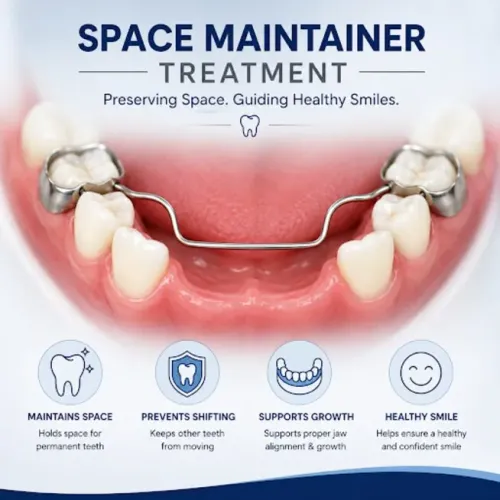
- Advice about a space maintainer and retained baby tooth when a baby tooth was lost early or has failed to fall out.
- A referral to an orthodontist when jaw growth, eruption timing, or a developing bite needs specialist monitoring.
Habits deserve a written target rather than casual reassurance. Discuss thumb-sucking and mouth breathing, including how long they occur, whether the child sleeps with an open mouth, and whether a paediatrician, ear-nose-throat specialist, or speech professional should assess the cause. Persistent habits can alter tooth position and jaw development.
A paediatric dentist in Hadapsar Pune such as Dr Rohini Lahane can help monitor these changes and coordinate referral when the finding exceeds routine dental care. Keep appointments, reinforce brushing around erupting teeth, and contact the clinician if a tooth becomes painful, unusually loose, or fails to appear on schedule.
Related service
Adult Dental Care Dr. Rohini Lahane (BDS, MDS) offers comprehensive braces treatment for children, teenagers, and adults to help achieve a healthier bite, properly... View service → |
Frequently asked questions
Why is age 7 recommended for a first orthodontic evaluation?
By age 7, enough permanent teeth are emerging for an orthodontist to identify developing bite, spacing, jaw-growth, and eruption problems. Early assessment can guide monitoring or timely treatment.
What does an orthodontic evaluation check?
The evaluation checks tooth eruption, crowding, spacing, bite alignment, jaw growth, crossbite, overbite, underbite, and habits that affect oral development. The orthodontist may also review dental records or recommend X-rays.
When should a child see an orthodontist before age 7?
Arrange an earlier assessment for severe crowding, a crossbite, an underbite, jaw pain or shifting, difficulty chewing, persistent mouth breathing, early or late loss of baby teeth, or permanent teeth that do not erupt.
Does an orthodontic evaluation at age 7 mean braces start immediately?
No. The evaluation age and braces age are different. Many children receive monitoring first, while treatment begins when the teeth, jaws, and growth pattern make it appropriate.
What should parents do after the orthodontic evaluation?
Ask what was found, whether treatment is needed now, when to return, and which changes require an earlier visit. Keep regular dental appointments and follow instructions about oral hygiene and habits.