A dark mark on a child’s tooth does not automatically mean drilling and a filling, while a painless cavity can still be damaging the tooth. By the end, you will know which signs need an examination, how dentists distinguish early decay from a cavity that needs restoration, and when a filling is not the right treatment.
Key takeaways
- Visible holes, food trapping, and surface changes need a dental examination.
- White spots can sometimes be managed with fluoride and improved cleaning.
- The dentist checks decay depth, tooth strength, symptoms, and remaining lifespan.
- A crown or extraction may suit a severely damaged baby tooth better than a filling.
Which Signs Suggest That a Child’s Tooth Needs an Examination?
A child needs a dental examination when you notice a visible hole, food trapping, or a change in colour or surface. White spots and brown spots can signal early or active decay, but neither automatically means the tooth needs a filling.
A dentist must check whether the enamel is intact, whether the area can be cleaned, and whether decay has reached dentine.
Arrange an assessment if your child has:
- Sensitivity to cold or sweets, toothache, or discomfort while chewing.
- Pain that starts without eating, lasts after hot or cold food, or wakes the child at night.
- A gum boil, swelling around the tooth, facial swelling, fever, or difficulty eating.
| Finding | What it may indicate | Why examination matters |
|---|---|---|
| White or brown spot | Early enamel change or progressing decay | Fluoride, diet and plaque-control measures may be enough if the surface is intact |
| Visible hole or repeated food trapping | A cavity that holds plaque and may extend into dentine | A filling or another treatment may be needed |
| Pain, swelling or night waking | Pulp inflammation, infection, or another dental problem | A simple filling may not be sufficient |
| No pain | Decay that has not reached the nerve, especially in a baby tooth | Painless decay can still progress and requires assessment |
Pain is not a reliable test: early decay often causes none, while pain can come from pulp inflammation or a different problem. Decay between teeth can hide from view, so the dentist may recommend bitewing X-rays when the examination cannot show its depth.
When Is Decay Early Enough for Prevention Instead of a Filling?
A white-spot or brown mark is not automatically a filling. An early enamel lesion has an intact surface. If it remains noncavitated, cleanable and stable, the dentist may use fluoride toothpaste, fluoride varnish, brushing and diet changes, resin infiltration, or monitoring rather than remove tooth structure.
| Stage | What it means | Usual approach |
|---|---|---|
| Early enamel lesion | Surface intact; no hole or plaque-trapping defect | Fluoride, plaque control, diet changes, resin infiltration or monitoring |
| Noncavitated groove lesion | Early decay in a pit or fissure without a break in the surface | A pit-and-fissure sealant can seal it and slow or arrest progression |
| Dentine cavity | Decay has entered dentine and created a defect that traps plaque | A filling is generally considered because brushing cannot keep it clean |
A pit-and-fissure sealant works only when the material can form a reliable seal. An established cavity that prevents sealing usually needs a different restorative approach. Resin infiltration can seal porous enamel without conventional drilling.
Monitoring is active: the dentist records the lesion, applies prevention and sets a review date. If it becomes cavitated, progresses on examination or radiographs, or causes symptoms, restoration or pulp treatment may be needed. A filling repairs that tooth; fluoride toothpaste twice daily, controlled sugary exposures and follow-up address the risk of new decay.
How Does the Dentist Decide Whether the Tooth Can Be Restored?
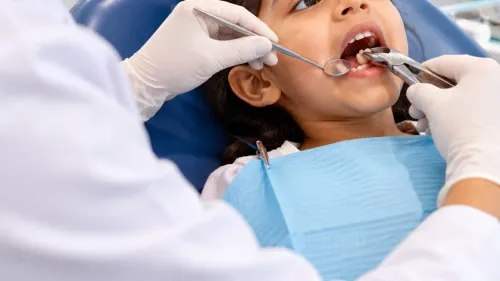
A dental examination begins with drying and visually inspecting each surface for a hole, softened enamel, food trapping, or a white or brown change. The dentist uses a probe gently to assess whether the surface is firm or whether decay has created a cavity; forceful probing can damage early enamel lesions.
Symptoms such as cold sensitivity, sweet sensitivity, toothache, swelling, or pain that wakes a child help indicate severity, but no pain does not prove that decay is shallow.
A bitewing X-ray is useful when decay lies between teeth, the cavity’s depth is unclear, or the clinical findings and symptoms do not match. The dentist chooses radiographs according to the child’s age, caries risk, symptoms and previous findings, rather than taking them automatically at every visit.
Tooth type changes the decision:
| Tooth | What the dentist weighs | Effect on restoration |
|---|---|---|
| Primary teeth | Remaining walls, pulp condition and time until exfoliation | Treat active decay, but a tooth close to natural loss may offer too little benefit to restore |
| Permanent teeth | Long-term function, developing root and remaining sound structure | Preserve sound tissue and restore a repairable tooth whenever possible |
The dentist also checks whether enough strong tooth remains to hold a filling and whether decay is near the pulp. A useful question for Dr Rohini Lahane is whether the tooth’s development, expected exfoliation date and remaining structure make a filling durable, or whether monitoring needs a documented review date.
Related service
Pediatric / Kids Dental Care Tooth Filling for Kids by Dr. Rohini Lahane in Hadapsar, Pune Dr. View service → |
When Is a Filling the Wrong Choice for a Child’s Cavity?
A filling is the wrong choice when too little sound tooth remains to hold it, decay has reached the pulp, or the primary tooth is close to normal exfoliation. Deep decay near the pulp can make a small restoration fail, while infection, swelling or a gum boil requires treatment beyond simply closing the cavity.
| Option | What it means | When it applies |
|---|---|---|
| Filling | Replaces limited missing tooth structure | Enough sound enamel and dentine remain, with a healthy pulp and reliable moisture control |
| Stainless-steel crown | Covers the entire tooth | A primary molar is badly broken down, has high caries risk, or needs protection after pulp therapy |
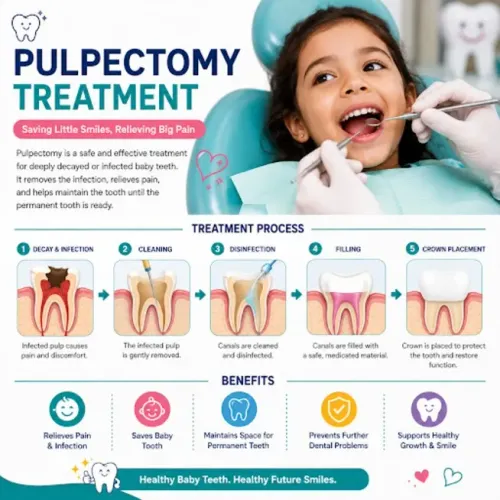
| Pulpotomy | Removes inflamed pulp from the crown while preserving healthy root pulp | The decay reaches the pulp but the roots remain suitable for vital treatment |
| Pulpectomy | Removes infected or irreversibly damaged pulp from the crown and roots | A restorable primary tooth has infection or persistent pulp symptoms |
| Silver diamine fluoride | Arrests many cavities without drilling but permanently stains decayed structure black | A very young, anxious or medically complex child cannot tolerate conventional treatment; it does not rebuild the tooth shape |
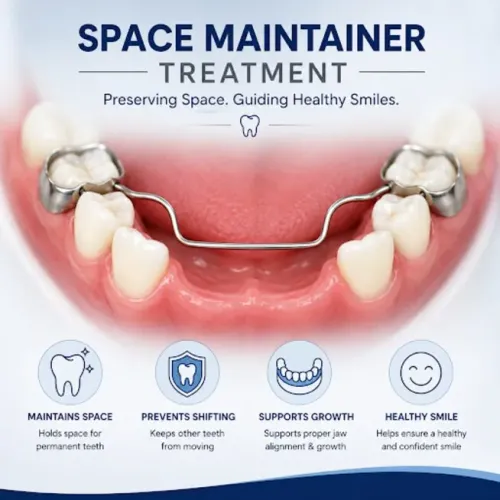
| Extraction with space maintenance | Removes the tooth and uses an appliance to preserve room | The tooth cannot be predictably restored, or it is close enough to falling out that restoration offers little benefit |
A dentist may monitor or remove a tooth nearing exfoliation rather than place a filling that will soon be unnecessary. Removing a primary molar too early can let neighbouring teeth drift, so space maintenance may protect the developing permanent tooth.
Pulp treatment or extraction needs prompt assessment when pain wakes the child, swelling or fever appears, or pain lingers.
What Should Happen After a Child Receives or Avoids a Filling?
A filling seals and rebuilds the treated tooth; it does not remove the child’s caries activity. A child who has developed one lesion remains at risk for another, so a sound-looking filling is not permission to stop prevention.
At home, focus on:
- Use twice-daily fluoride toothpaste: children younger than 3 need a smear or rice-grain amount; children aged 3 to 6 need a pea-sized amount.
- Supervise brushing and help your child spit rather than routinely rinsing away the toothpaste.
- Reduce frequent sugary exposures, especially between meals and at bedtime.
- Prioritise plaque removal around the filling and on all other teeth.
A white-spot or brown lesion without a cavity may remain under active monitoring when it is stable and the child’s risk is controlled. Fluoride treatment, improved brushing, diet changes or another preventive measure can be used instead of a filling when the surface has not broken down.
Keep every scheduled reassessment. The dentist checks whether the restoration remains sealed, whether new lesions have appeared and whether a monitored area is progressing. A growing cavity, food trapping, new sensitivity, a loose or broken filling, swelling or spontaneous pain needs examination rather than waiting for the next routine visit.
Progression means monitoring is no longer safe and further treatment may be needed.
Frequently asked questions
Which signs suggest that a child’s cavity needs an examination?
Arrange an examination for a visible hole, food trapping, tooth sensitivity, pain, swelling, or a change in colour or surface. White and brown spots also need assessment because they can indicate early or active decay.
When can early tooth decay be prevented instead of filled?
Prevention may be suitable when decay is limited to the enamel and the tooth has no hole, pain, or signs of deeper damage. The dentist may recommend fluoride, brushing with fluoride toothpaste, dietary changes, and follow-up checks.
How does a dentist decide whether a child’s tooth can be restored?
The dentist assesses the decay’s depth and location, the amount of healthy tooth remaining, symptoms, infection risk, the child’s cooperation, and how long a baby tooth is expected to remain.
When is a filling the wrong choice for a child’s cavity?
A filling may be unsuitable when decay has destroyed too much tooth structure, reached the pulp, caused an abscess, or left too little tooth to support the restoration. A stainless steel crown, pulp treatment, or extraction may then be considered.
What should happen after a child receives or avoids a filling?
After treatment, maintain twice-daily brushing with fluoride toothpaste, limit frequent sugary snacks and drinks, and attend the recommended review. Untreated early decay also needs monitoring so progression is detected promptly.