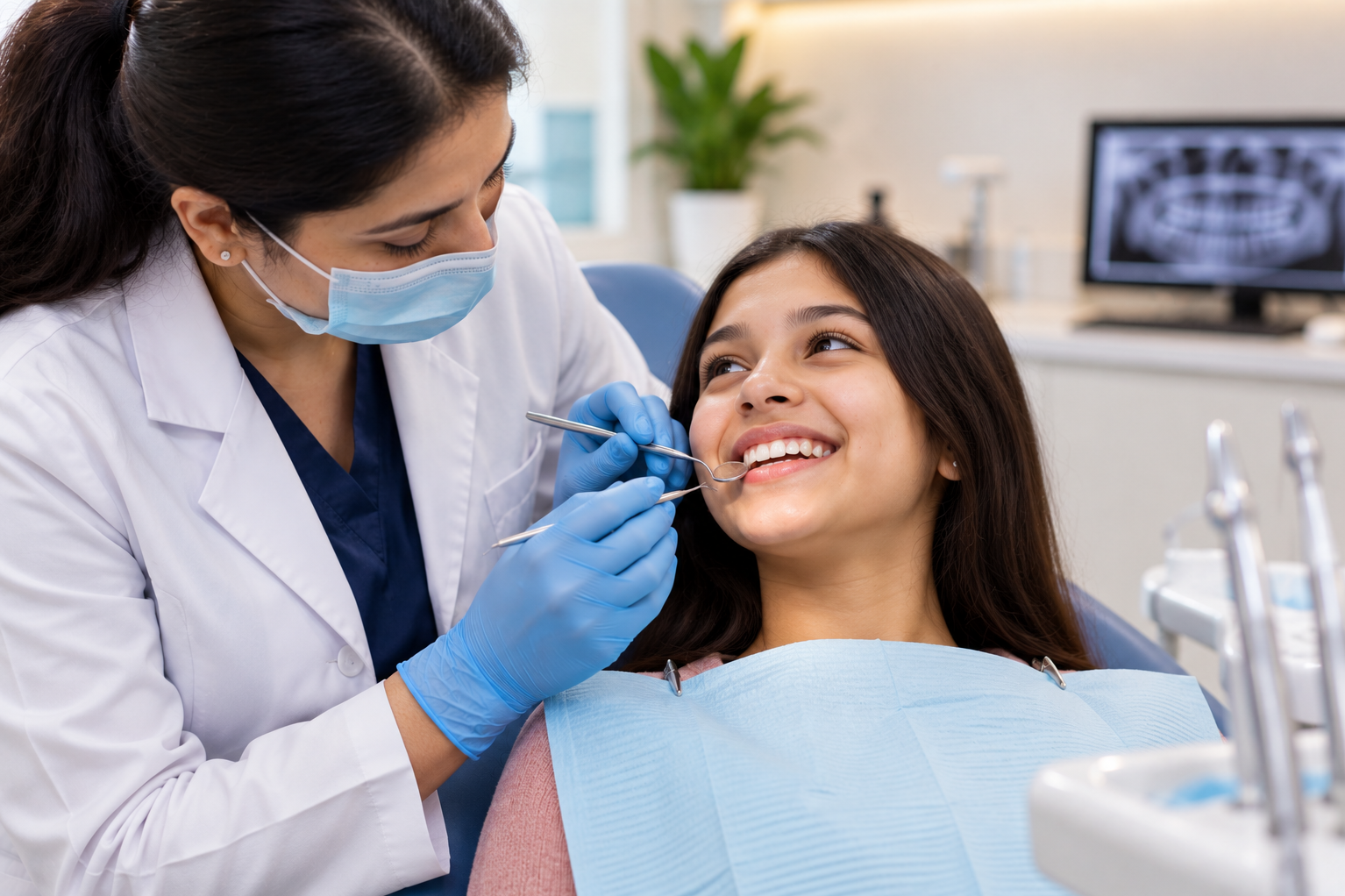
Teenagers can become highly conscious of chipped, stained, uneven, or unusually shaped teeth. While a Cosmetic dentist can offer several ways to improve dental appearance, treatment in adolescents needs careful planning because teeth, gums, and facial structures may still be developing.
For families in Hadapsar, Pune, the safest starting point is a dental assessment that identifies the cause of the cosmetic concern before selecting a procedure.
Which Cosmetic Concerns Are Common in Teenagers?
Parents may request evaluation for:
- Chipped front teeth
- Discolouration after dental trauma
- Uneven tooth shape
- Developmental enamel defects
- Gaps between teeth
- Crooked teeth
- Staining
- Differences in tooth size
- Old visible restorations
Some problems are primarily aesthetic, while others may indicate underlying dental disease or previous injury.
Diagnosis Should Come Before Cosmetic Treatment
A darkened front tooth following trauma, for example, should not simply be covered for appearance. The tooth may require vitality assessment and dental imaging.
Similarly, white or brown enamel patches can have different causes. Understanding the diagnosis helps determine whether monitoring, restorative treatment, orthodontics, or another approach is appropriate.
For crooked teeth, orthodontic correction may sometimes provide a more conservative solution than reshaping otherwise healthy teeth.
Which Treatments May Be Considered?
Treatment depends on age and diagnosis.
Conservative procedures may include tooth-coloured bonding for selected chips or shape irregularities. Restorative treatment can also improve appearance when decay or previous damage is present.
More irreversible cosmetic procedures require particularly careful consideration in young patients. Removing healthy tooth structure at a young age can create a lifetime need for maintenance and replacement restorations.
Whitening also requires professional assessment. Teenagers should not use strong whitening products simply because they are widely promoted online.
What Should Happen Before Treatment?
The dentist should first ensure that teeth and gums are healthy.
Active decay, gum inflammation, poor oral hygiene, and unresolved dental trauma generally need attention before elective cosmetic work.
Parents and teenagers should discuss:
- What causes the appearance concern?
- Is treatment necessary at the current age?
- Is there a less invasive option?
- How long is the result expected to last?
- Will maintenance be required?
- What are the possible risks?
This is particularly important when the proposed procedure permanently alters natural tooth structure.
Recovery and Post-Treatment Care
Recovery depends on the procedure. Simple bonding may require little downtime, while gum-related or more involved restorative procedures can require a longer healing period.
Patients should follow instructions concerning food, brushing, sensitivity, and protection of restorations.
Cosmetic restorations are not indestructible. Nail biting, chewing hard objects, sports injuries, and poor oral hygiene can shorten their lifespan. A mouthguard may be recommended for teenagers participating in relevant sports.
What Are the Risks?
Potential disadvantages vary by procedure and can include sensitivity, gum irritation, restoration fracture, colour mismatch, recurrent decay, and the eventual need for repair or replacement.
For this reason, conservative dentistry is especially important during adolescence.
Families seeking cosmetic dental guidance for teenagers around Hadapsar can consult Dr. Rohini Lahane for an initial dental assessment and appropriate treatment planning.
Improving a teenager’s smile can have aesthetic benefits, but treatment should preserve healthy enamel wherever possible. The right cosmetic plan is one that balances appearance with dental development, long-term maintenance, oral health, and the patient’s age.
Keywords