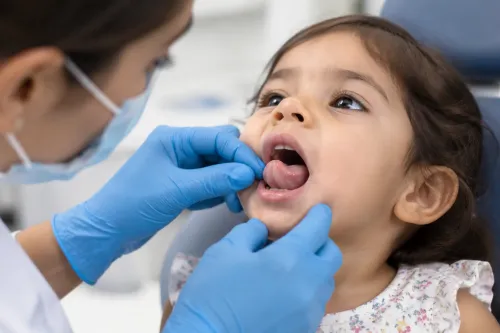



The upper lip is naturally connected to the gum by a fold of tissue known as the labial frenulum. Its appearance varies significantly among babies and children. A prominent frenulum does not automatically indicate a problem, which is why Lip tie treatment should be based on clinical findings and functional concerns.
Parents in Wanowrie, Pune may encounter the term while investigating infant feeding problems, oral development, or a noticeable gap between the upper front teeth.
What Is a Lip Tie?
The term generally describes a labial frenulum believed to restrict movement of the upper lip. Assessment can be challenging because normal anatomy varies with age and changes as a child grows.
Instead of judging the frenulum by appearance alone, a clinician should consider whether it is contributing to a specific functional problem.
Potential concerns may involve feeding in infancy or, in selected older children, oral hygiene and dental development.
Feeding Problems Need Broader Assessment
When an infant struggles with breastfeeding or bottle feeding, it is tempting to attribute the difficulty to a visible lip tie. Feeding, however, depends on multiple factors.
Latch, positioning, milk supply, oral coordination, tongue movement, medical conditions, and other anatomical factors may all contribute.
A suitable assessment may therefore involve the child’s pediatrician, lactation professional, and pediatric dental practitioner when appropriate.
When Might Treatment Be Considered?
Treatment may be discussed when careful evaluation identifies a restrictive frenulum that appears clinically relevant to the child’s problem.
The decision should take into account:
- Age
- Feeding history
- Lip mobility
- Oral anatomy
- Dental development
- Symptoms
- Previous conservative management
- Expected benefit of intervention
For older children, parents sometimes ask whether a prominent frenulum is responsible for spacing between the upper front teeth. Because dental spacing can change naturally as permanent teeth erupt, timing is important. Intervention should not be performed solely because a gap is visible without appropriate dental assessment.
What Happens During Treatment?
If treatment is clinically justified, the restrictive tissue may be released using an appropriate technique. The exact procedure and anaesthesia depend on age, anatomy, cooperation, and the extent of treatment required.
Parents should receive a clear explanation beforehand, including expected benefits, limitations, possible complications, and aftercare.
Recovery and Home Care
Temporary soreness, minor swelling, or feeding changes can occur following a frenulum procedure. Recovery varies, so the treating dentist’s instructions should take priority over generalized online advice.
Good post-treatment care may involve maintaining appropriate oral cleanliness, following feeding guidance, using medication only as advised, and attending recommended reviews.
Potential complications can include bleeding, infection, discomfort, scarring, and incomplete resolution of the original functional concern.
Frequently Asked Questions
Is a visible upper frenulum abnormal?
Not necessarily. Frenulum appearance varies considerably among children.
Should a lip tie automatically be released?
No. Treatment should generally be linked to a clinically meaningful problem and appropriate assessment.
Can treatment close a gap between front teeth?
A frenulum may contribute to spacing in some cases, but dental development and tooth position also matter. Treatment timing requires professional evaluation.
Families considering assessment in Wanowrie can consult Dr. Rohini Lahane to understand the child’s oral anatomy and whether intervention has a reasonable functional indication. In pediatric dentistry, avoiding unnecessary procedures is just as important as providing treatment when it is genuinely needed.