
Crooked teeth are often viewed mainly as a cosmetic concern, but tooth alignment can also influence cleaning, bite function, tooth wear, and the way the upper and lower teeth meet.
For this reason, people considering braces treatment in Hadapsar should look beyond appearance alone. Orthodontic assessment helps determine what is causing the alignment problem and which treatment approach may be appropriate.
What Problems Can Braces Address?
Orthodontic treatment may be considered for different types of dental and bite concerns, including:
- Crowded teeth
- Gaps between teeth
- Rotated teeth
- Protruding teeth
- Certain overbite or underbite patterns
- Crossbite
- Teeth erupting in unfavourable positions
- Bite relationships requiring correction
The complexity of treatment varies considerably between patients.
At What Age Should Children Be Evaluated?
Children do not necessarily need to wait until every permanent tooth has erupted before having their bite assessed.
An earlier evaluation can identify developing concerns involving jaw growth, eruption, crowding, oral habits, or bite relationships. In some cases, monitoring is all that is required. In others, treatment at a particular developmental stage may be beneficial.
This does not mean every child with slightly uneven teeth needs immediate braces.
Are Braces Only for Teenagers?
No. Adults can also undergo orthodontic treatment if their teeth, gums, and supporting structures are suitable.
Many adults seek treatment because of long-standing crowding, spaces, shifting teeth, or concerns about their smile.
Age alone does not determine eligibility. Oral health and the nature of the orthodontic problem are more important considerations.
Traditional Braces and Other Options
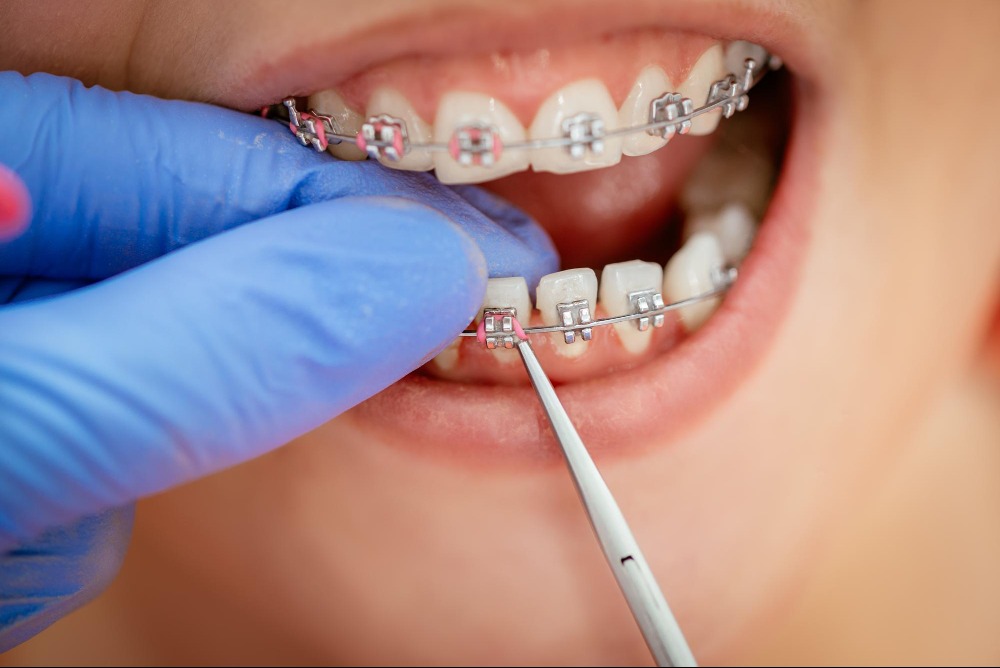
Conventional braces use brackets and wires to move teeth gradually. Depending on the case, other orthodontic systems may also be considered.
Clear aligners are popular among some adults because they are removable and less noticeable. However, they require consistent wear and may not be the ideal choice for every orthodontic problem.
Treatment should therefore be selected according to diagnosis rather than appearance or convenience alone.
What Should Be Checked Before Starting?
Before orthodontic treatment, active dental problems should be identified.
Cavities, gum disease, impacted teeth, or other concerns may need attention before tooth movement begins. Dental X-rays and other records can also help with planning when clinically required.
Patients visiting Dr Rohini Lahane in Hadapsar, Pune, can have their teeth and bite assessed to understand whether orthodontic treatment should be considered and what additional evaluation may be necessary.
How Long Does Treatment Take?
There is no single timeline that applies to everyone.
Treatment duration can depend on the complexity of tooth movement, bite correction required, treatment method, biological response, and patient cooperation.
Appointments during treatment are important for monitoring progress and making required adjustments.
Retention after braces or aligner treatment is equally important because teeth can gradually move after active orthodontic treatment ends.
For anyone considering braces treatment in Hadapsar, the right time to begin is when the alignment problem has been properly assessed and an appropriate treatment plan has been established. The objective is not simply straighter-looking teeth, but a result planned around dental health, bite, stability, and individual needs.